

聯(lián)系人: 寧經(jīng)理 手機(jī):13953116782 電話:15990999232 郵箱:499589624@qq.com 地址:濟(jì)南市槐蔭區(qū)清河北路11號(hào)(美里新居南門斜對(duì)面)亞德森工廠店
濟(jì)南工作服怎么知道面料是不是防靜電的?怎么檢測(cè)判斷是不是防靜電材質(zhì)?
來(lái)源:http://m.lihwa.cn 日期:2026-02-19 發(fā)布人:
當(dāng)我們采購(gòu)防靜電服的時(shí)候,由于大多數(shù)人都是外行,只能憑供應(yīng)商業(yè)務(wù)員隨便說(shuō),于面料材質(zhì)到底是不是防靜電的,我們就無(wú)從得知。下面就讓我們說(shuō)說(shuō),怎么檢測(cè)判斷是不是防靜電材質(zhì)?
When we purchase anti-static clothing, as most people are inexperienced, we can only rely on the supplier's salesperson to casually say. As for whether the fabric material is anti-static or not, we have no way of knowing. Now let's talk about how to detect and determine whether it is an anti-static material?
怎么知道面料是不是防靜電的
How do you know if the fabric is anti-static
防靜電面料的判斷方法
Methods for judging anti-static fabrics
經(jīng)緯密度測(cè)量:用經(jīng)緯密度鏡計(jì)測(cè)量織物的經(jīng)緯密度,并進(jìn)行比較。
Measurement of latitude and longitude density: Use a latitude and longitude density mirror to measure the latitude and longitude density of the fabric and compare them.
電阻測(cè)量:用表面電阻測(cè)試儀測(cè)量織物的經(jīng)緯電阻,并進(jìn)行比較。
Resistance measurement: Use a surface resistance tester to measure the warp and weft resistance of the fabric and compare them.
比較的原則是:選擇電阻較小的;如果電阻相同,選擇穩(wěn)定的電阻值。
The principle of comparison is to choose the one with lower resistance; If the resistance is the same, choose a stable resistance value.
注意面料是否添加抗靜電整理劑(適用于經(jīng)紗方向添加導(dǎo)電纖維的導(dǎo)電稠,俗稱條紋布)。方法是用表面電阻測(cè)試儀測(cè)量經(jīng)紗方向和緯紗方向的電阻。如果相同,說(shuō)明添加了抗靜電整理劑,那么測(cè)得的電阻不代表真實(shí)水平。
Pay attention to whether the fabric has added anti-static finishing agents (suitable for conductive thick fabrics with conductive fibers added in the warp direction, commonly known as striped fabrics). The method is to use a surface resistance tester to measure the resistance in the warp and weft directions. If they are the same, it means that anti-static finishing agent has been added, and the measured resistance does not represent the true level.
看微觀結(jié)構(gòu):用高倍放大鏡看面料質(zhì)量,比較纖維之間的間隙大小(與濾塵率有關(guān)),看纖維表面是否有附著物(與粉塵散發(fā)量有關(guān)),看纖維排列是否整齊,緊密度是否一致(如果緊密度不一致,有些松散的纖維在洗滌時(shí)容易磨損,后期磨損會(huì)散發(fā)粉塵)。
Observing microstructure: Use a high-power magnifying glass to examine the quality of the fabric, compare the gap size between fibers (related to dust filtration rate), check for any attachments on the fiber surface (related to dust emission), check for neat fiber arrangement and consistent tightness (if the tightness is not consistent, some loose fibers are prone to wear during washing, and later wear will emit dust).
檢查導(dǎo)電纖維:導(dǎo)電纖維是防靜電超凈面料的關(guān)鍵原料。檢查導(dǎo)電纖維就是看是否按照規(guī)格添加導(dǎo)電纖維,添加什么樣的導(dǎo)電纖維。
Check conductive fibers: Conductive fibers are a key raw material for anti-static and ultra clean fabrics. Checking conductive fibers is to see if conductive fibers are added according to specifications and what kind of conductive fibers are added.
檢驗(yàn)方法:用剪刀小心地沿著黑色導(dǎo)電纖維的邊緣切割織物,分離黑色導(dǎo)電纖維,用放大鏡觀察是否有一根或幾根較粗的纖維,用表面電阻測(cè)試儀測(cè)量分離后的導(dǎo)電纖維的電阻。連續(xù)去除幾片后,基本可以判斷織物中的每一根黑絲是否含有導(dǎo)電纖維。(導(dǎo)電絲由碳有機(jī)導(dǎo)電纖維制成,黑色或灰色,一般在20D左右,1f-6f之間。為了滿足織造中的強(qiáng)度要求,需要并一根普通的黑色或白色化纖纖維。
Inspection method: Carefully cut the fabric along the edges of the black conductive fibers with scissors, separate the black conductive fibers, observe with a magnifying glass whether there are one or several thicker fibers, and measure the resistance of the separated conductive fibers with a surface resistance tester. After removing several pieces continuously, it can be basically determined whether each black filament in the fabric contains conductive fibers. The conductive wire is made of carbon organic conductive fibers, black or gray, usually around 20D and between 1f-6f. To meet the strength requirements in weaving, a regular black or white synthetic fiber is needed.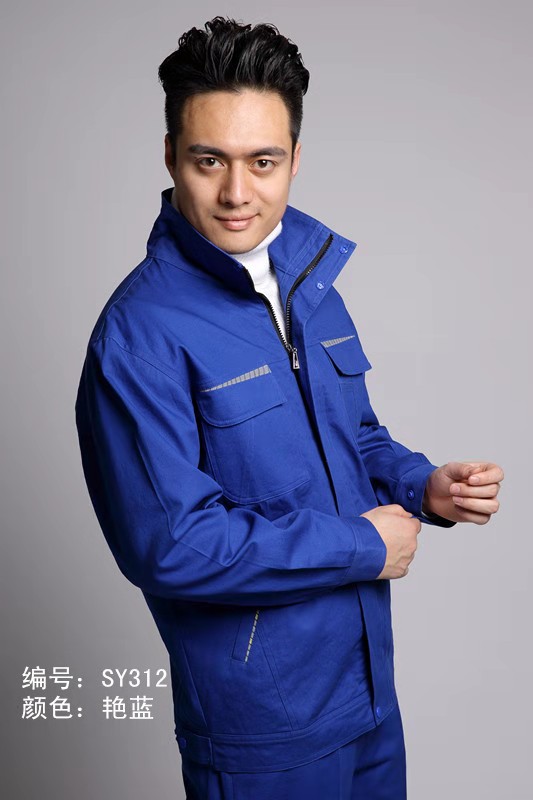
對(duì)比面料工藝參數(shù):要求供應(yīng)商提供面料的基本參數(shù),如紗線細(xì)度(多少D,多少F)、經(jīng)緯密度、面料組織、成品寬度、染色收縮率、使用何種導(dǎo)電纖維等,然后進(jìn)行對(duì)比,看是否相符。
Comparing fabric process parameters: Suppliers are required to provide basic parameters of the fabric, such as yarn fineness (how much D, how much F), warp and weft density, fabric structure, finished product width, dyeing shrinkage rate, and what type of conductive fiber is used, and then compare to see if they match.
以上就是關(guān)于,如何判斷面料是不是防靜電的相關(guān)內(nèi)容,希望對(duì)您有所幫助。我們長(zhǎng)期為各類企業(yè),供應(yīng)高品質(zhì)防靜電服,如果您近有這方面的需要,歡迎與我們?nèi)〉寐?lián)系。
The above is about how to determine whether a fabric is anti-static. I hope it is helpful to you. We have been supplying high-quality anti-static clothing to various enterprises for a long time. If you have any needs in this area recently, please feel free to contact us.
資訊MORE+
- 濟(jì)南工作服怎么知道面料是不是防靜電的?怎么檢測(cè)判斷是不是防靜電材質(zhì)? 2026-02-19
- 濟(jì)南工作服的面料選擇需要循序三點(diǎn): 2026-02-13
- 濟(jì)南工作服講解滌綸是不是差的面料?衣服面料檔次從高到低 2026-02-12
- 濟(jì)南服裝廠:消防服的穿戴及使用注意事項(xiàng) 2026-02-06
- 濟(jì)南職業(yè)裝保養(yǎng)的小知識(shí)(濟(jì)南職業(yè)裝打理方法) 2026-02-04
- 硬核科普!濟(jì)南防化工作服穿脫指南,每一步都關(guān)乎 2026-02-02
- 濟(jì)南服裝廠日常:品質(zhì)藏在細(xì)節(jié)里!針距、印花每天必查 2026-01-30
- 濟(jì)南鐵路工作服定制定制定制一般幾年一換 2026-01-28
- 濟(jì)南職業(yè)裝定制的五大面料,男士必看 2026-01-27
- 濟(jì)南服裝廠:工作服制作時(shí)要看用途再去選擇面料 2026-01-23
- 濟(jì)南工裝定做:為什么建議大家定做一定要看樣品呢 2026-01-22
- 濟(jì)南職業(yè)裝:如何正確的量西裝尺寸? 2026-01-20
- 濟(jì)南服裝廠:定制工程制服的重要性 2026-01-16
- 濟(jì)南工裝定做需要知道哪些尺寸? 2026-01-14
- 濟(jì)南工作服,不是福利,也非勞保,計(jì)入什么科目?能否稅前扣除? 2026-01-12
- 濟(jì)南職業(yè)裝著裝的基本要求 2026-01-11
- 濟(jì)南工作服三緊是指什么? 2026-01-10
- 濟(jì)南服裝廠科普:次定制收版費(fèi)?真相是這樣! 2026-01-05
- 濟(jì)南服裝廠真心話:七八十個(gè)網(wǎng)版印兩百件衣服,這才是高成本定制! 2025-12-31
- 科技公司年輕團(tuán)隊(duì)濟(jì)南工作服怎么選?顏值實(shí)力雙在線才對(duì)味 2025-12-27


